
Home
Fahle kvartal
(Emil Fahle, 1875-1929)
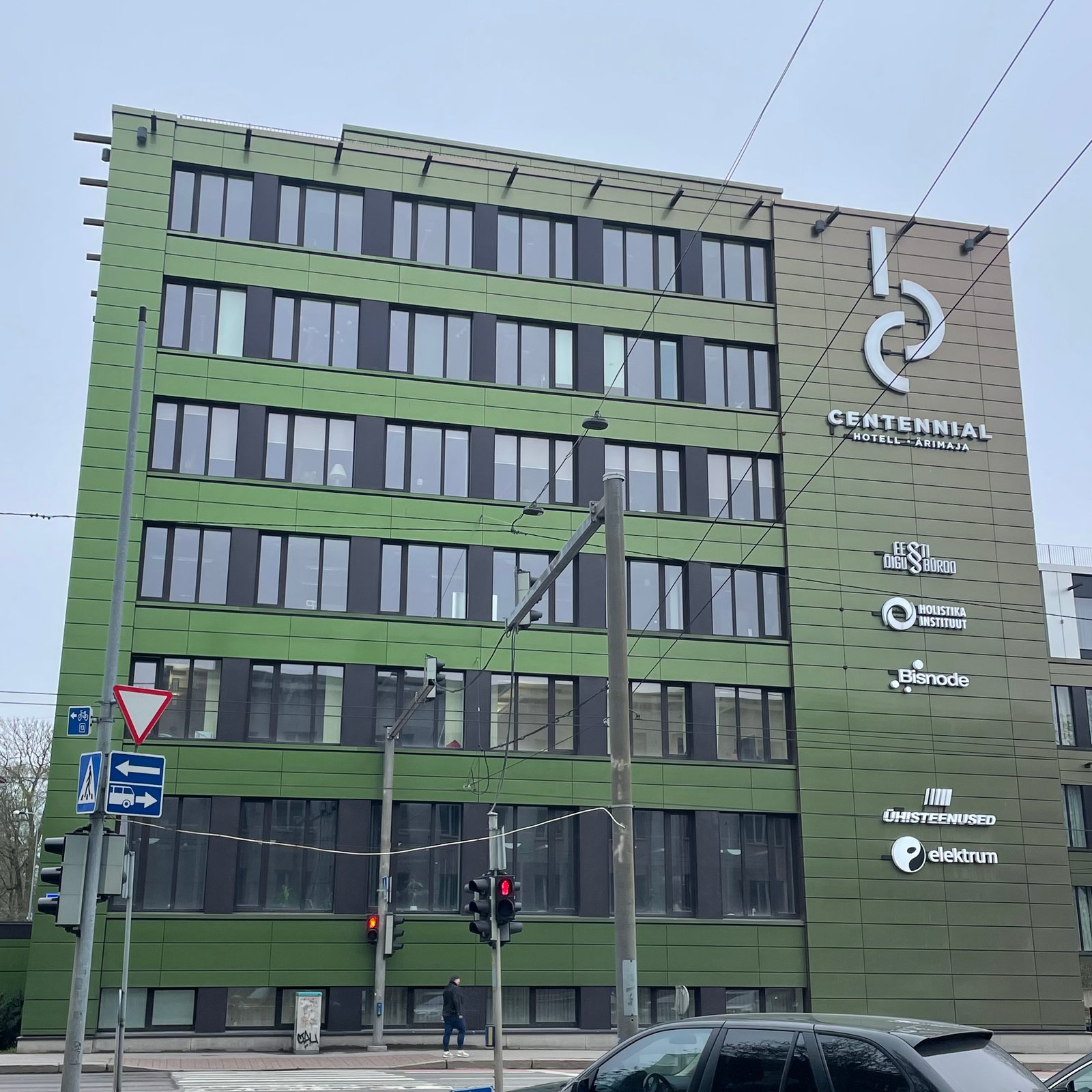
Fahle quarter, not necessarily an official name, but the Fahle Maja (house) and next-door building are so well known they merit an entry to themselves. Built on an original paper mill dating back to 1664 and passing through various hands, the former pulp and paper factory, AS Põhja Puupapi- ja Tselluloosivabrik, was taken over and managed by Estonian businessman Emil Fahle (incidentally, both born and died in Germany) in 1899. Although it may not have been the first, the Fahle Maja itself symbolizes and typifies the old-and-new combination of Tallinn’s heritage-building reconstruction. The building on Tartu, known simply as ‘Fahle’, is now a combination complex for business, accommodation and venues. His former residence is now the Fahle Aed (garden) on the corner or Pirita and Narva.
Väike-Pääsukese (Väike-Pääsuke[ne])
Lesser swallow street. Another odd one. Like its bigger brother Pääsukese, the name is barely used, and the solitary street sign of its unpronounceable name is positioned in the most out-of-the-way place possible.
Teenri (Teener)
Servant. A narrow street no longer in existence (KNAB gives up to 1954, but does not appear on the Tallinn map Tallinna Linna Plaan 1922) between Kinga and Mündi, off Raekoja plats. Said to be named because location of various city notables’ business residences, but given its earlier names – Teendri (1885) and Dienerstraße (both: ‘servant’) and Russian Лакейская (Lakiejskaja, from Fr. laquais (footman or lackey), whence the English) – perhaps after the notables’ employees instead. Located somewhere behind Tallinn’s one-time Vaekoda (weigh-house, built 1554-54, burnt down 1945) and fire-station (±1780 – yeah).
Tehumardi (Tehumardi)
Village in southern Saaremaa where a brutal battle between Russians and Germans was the beginning of the end of German presence on the island. Monument erected in 1967. Village first recorded in 1645 as Theomarte after a farm based on two names: Theo, via Tehu, from an abbreviation of Stefanus, and Marte, prob. from Martinus. Soviet occupation renaming (1979-1995) of Vilisuu.