
Names
Käbi (Käbi)
Cone (pine or otherwise, street parallel to Orava). (Also strobila, larval stage of jellyfish or segment of a tapeworm). Käbi ei kuku kännust kaugele, literally, the cone doesn’t fall far from the stump, usually rendered: a chip off the old block, but with, in earlier days perhaps, a slightly negative tone, since Kännu also means old fogey. On the other hand, since this is actually 3.5 km away, perhaps we ought give less credence to proverbs... Note too the abundance of k’s, a letter occupying a special place in Estonian hearts. At least 15% of Estonian words start with K.
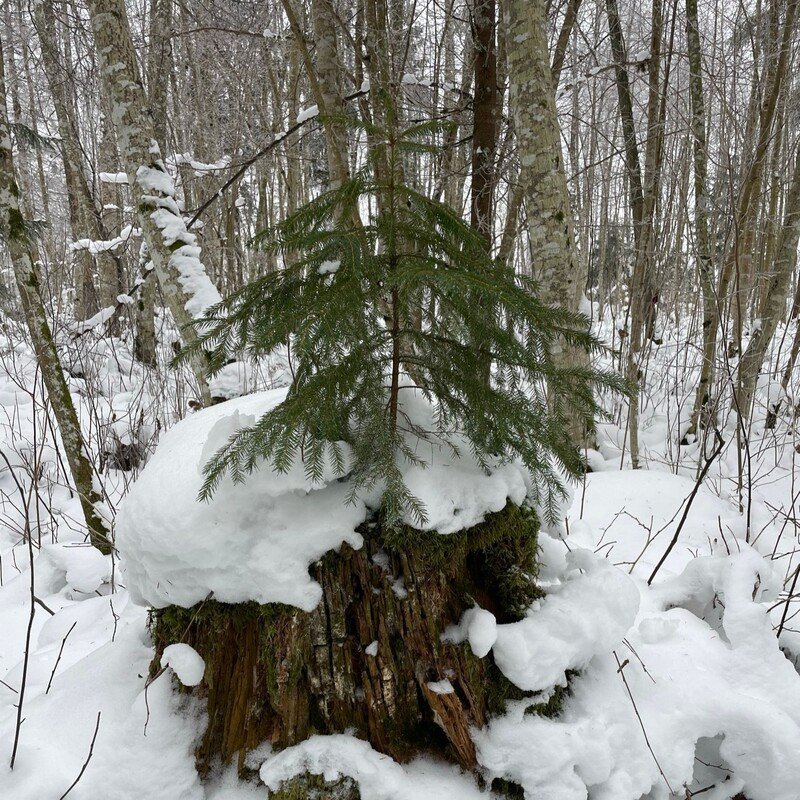
Photo courtesy of unnamed Bluesky donor.
Käbliku (Käblik)
Winter Wren, a Baltic loan word (bird with the loveliest Latin name: Troglodytes troglodytes!). Breeds in Estonia. The Võro* for wren is koobakõnõ, but, see Tarabella, this is surely a coincidence. Part of the Lilleküla bird-name group of streets. See also Käo.
* For spelling, see Kõivu.
Kadaka asum (Kaddak) 
Juniper, name of 3 entities: see also Kadaka tee and Kadaka puiestee. Sub-district (asum) built on an eponymous former manor house / village known as Kaddak in the 18th C and belonging to Haabersti. The founding-name was almost certainly the common juniper bush, better known as harilik kadakas, Juniperus communis. As any gin drinker, Swiss, Dutch (another gin-producing country, hence the drink’s other name of Hollands...) or otherwise, would know, its berries are used for flavoring: Juniper, in French is genièvre (geneva), another old term for gin. Note, however, that the Swiss city comes from Celtic *genu- (mouth, as in estuary). Settlements date back to late Bronze Age. Kadaka also includes 9 quarters (kvarterid), (about the same as Wards, allasumid): Akadeemia, Kadaka I, II & III; Laki I & II; and Mäepealse I, II & III.
Trivia bonus: savin or savin juniper, Juniperus sabina, is called either sabiina kadakas or kasakakadakas, lit., Cossack juniper, possibly the longest word in Estonian based on only 4 letters where every second one is an ‘a’. Prove me wrong! The longest ‘word’ consisting in individual consonants plus the letter ‘a’ is samavanakalamajasadamarahatagavarapadajamarajakavatavad, a pretty meaningless linguistically-feasible Chomskian gibberish word claimed, generously, to sorta mean: the same-old with the same-old troubles in planning a Kalamaja harbour coffer route. Now you know. See also Käsperti J.
Kadaka puiestee (Kaddak)
Juniper, see Kadaka asum. Formerly Kaddaksche Promenade, splitting off some 800 m before the W end of Kadaka tee and running 4 km NNE-SSW down to the Rohula-Pärnu roundabout in Pääsküla. Avenue also known from 1940-1941 as Kommunaari puiestee, after either the Paris Communards or the Noored Kommunaarid review written by Estonian communists in Russia from 1920-1922 or, far less likely, the town of Kommunaar near St Petersburg (a ‘Kommunaar’ footwear and leather-goods firm took up the banner from 1944). See also Kadaka tee.
Kadaka tee (Kaddak)
Juniper, see Kadaka asum. Formerly Kaddakscher Weg, a roughly 2.7-km road running NE-SW from Mustamäe tee into an unenthusiastic field west of Rehe. See also Kadaka puiestee.