
Names
Kajaka (Kajakas)
Tallinn: cold, wet and fishy coastal harbor town... that means seagulls, kittiwakes, gulls and mews. As they say in Pöide: Narri küll meest, ära narri mehe kübärät, Laugh at the man, not at his hat... Breeding in Estonia are, and since there’s a whole beachful, a list is best:
- Harksaba-kajakas, Sabine’s gull, Larus sabini
- Hõbekajakas, herring gull, L. argentatus
- Jääkajakas, glaucous gull, L. hyperboreus
- Kalakajakas, common gull or sea mew, L. canus, see Lõuka
- Kaljukajakas, black-legged kittiwake, Rissa tridactyla
- Karbuskajakas aka Mustpea-kajakas, Mediterranean gull, L. melanocephalus
- Koldjalg-hõbekajakas, Caspian gull, L. cachinnans
- Lõuna-hõbekajakas, yellow-legged gull, L. michahellis (not a spelling mistake for michaelis, but named after the short-lived (died of dysentery) Bavarian zoologist Karl Michahelles [1807-34])
- Merikajakas, great black-backed gull, L. marinus
- Naerukajakas, black-headed gull, L. ridibundus
- Polaarkajakas, Iceland gull, L. glaucoides
- Roosakajakas, Ross’s gull, Rhodostethia rosea
- Tõmmukajakas, lesser black-backed gull, L. fuscus
- Vandelkajakas, ivory gull, Pagophila eburnea
- Väikekajakas, little gull, L. minutus
Part of the Lilleküla bird-name group of streets. See also Kauri.
Kakumäe (Kakumäe) 
Reads like loaf/bannock or owl hill, but meaning uncertain. For some, kaku comes from kakk:kaku, earless or wood owl, Strix spp., while folk etymology prefers the more romantic (wut?...) katk:katku, plague, from a plague-epoch mass grave, but which plague: 1211-12 or 1532, is not clear? Neither is that convincing. One intriguing possibility is that it’s a ‘loan’ from an earlier reference to Õismäe (next-door Sub-district) where its name may (how?...) be derived from kukits, bunchberry or dwarf cornel, (Cornus, formerly Chamaepericlymenum, spp.), which grew extensively in the area. Spelling has ranged from Kakamaye (first mentioned 1467) through Kakomiag with a village named Kaggomeggi in 1726 to Kakomäggi and Kackemaye. Lent its name to a Haabersti summer manor, and/or locality including peninsula (poolsaar), cape (neem), spit (nina), and bar (leetselg, sandbank not bottlebank) in NW Tallinn. Former location of various fishing villages. For the erratically enthusiastic, there is a Mustkivi on the tip of the peninsula at ///target.lagoon.continuation (or ///swell.impassioned.buffeting)(?), see Rändrahnu.
Kaladi (Kaladi)
Gauge: slat of wood or bone used to ensure regular mesh-size in net-making. Part of a fishing-tackle group, see also Kessi.
Kalamäe soo (Kalamägi)
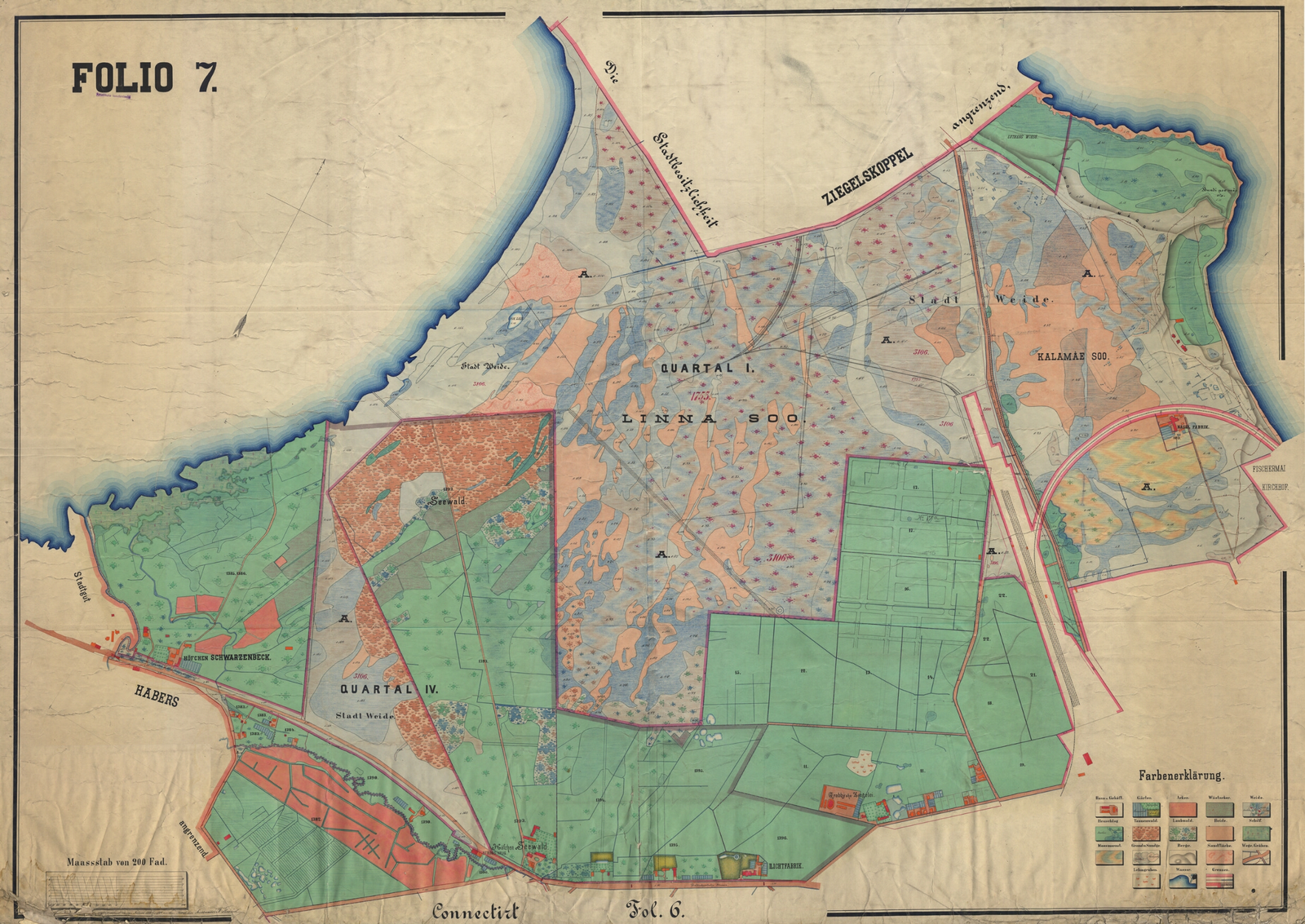
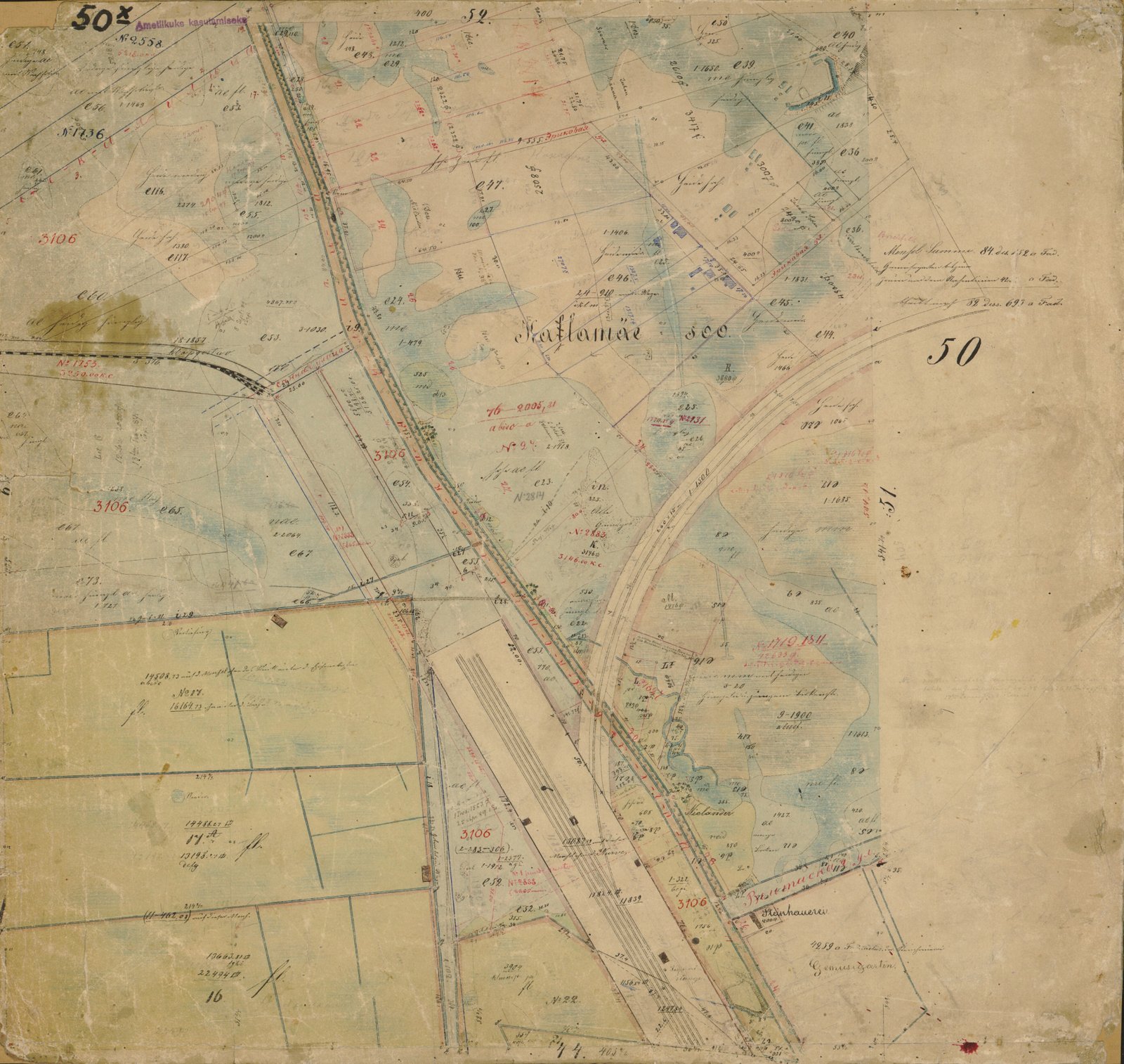
Fish hill/mountain marsh. Not listed in KNAB, but indicated on Johann Friedrich Eurich’s survey map of Tallinn (1880-1882) (top). Since a hill is more or less the opposite of a marsh, and since it was actually located immediately NW of today’s Kalamaja Sub-district, uncertainties as to whether the name was Kalamäe Soo (Eurich) or Kalamaja Soo (Kivi). Sometimes written Kallamäe. (Eurich, again, apparently, bottom map)
Kalamaja (Kalamaja)
Fisherman’s hut, name of a one-time fishing village, along with the three ages of man: Uus-Kalamaja (new, but let’s say ‘young’ for poetic license), Kesk-Kalamaja (Middle-aged), and Vana-Kalamaja (Old). The word maja, probably first meant a temporary shelter, hut or stopover, as suggested by its neighboring Izhorian, Karelian, Ludian and, to a lesser extent Finnish, Livonian and Votic. Records date back to 1374 and known as Suddenpe in 1421, prob. MLG+Old Est. for “On the marsh/swamp” (südde/sudde = morass or swamp) + pe>pea (see Narva). Note, too the old ‑n genitive.
Kalamehe (Kalamees)
Fisherman, angler. One of an occupational street-name group. See Meremehe. Kala is derived from the proto Finno-Ugric *kala, fish (see also Karelian, Finnish & Veps kala, Hungarian hal, Sámi guöllé, Nenets, халя, etc.) and related to Uralic (Mansi: хул) and Altaic (Tungusic: kul, salmon; Khalka Mongolian: xalim, whale, presumably of the biblical prophet-swallowing variety, hard to imagine them having a word for it otherwise). Clearly a very old word, although not corroborated by the last example: Christianity was first known in Mongolia in the late 13th/early 14th C. Further away again, we have Proto-Eskimo *iqałud, Sumerian kad, and even Somali, kalluun, all also fish. Stepping into very murky waters, along with other basic words such as Uralic *nime giving Estonian nimi, and maybe related to Sanskrit nā́man-, Latin nomen and English name, our PIE *kʷalo-, large fish (cf. Latin squalus, dogfish or ‘large sea fish’), Old Prussian kalis, shad, and Old English hwæl, giving present-day whale suggest possible common origins going back at least 5000 years.