
Home
Plaasi (?)
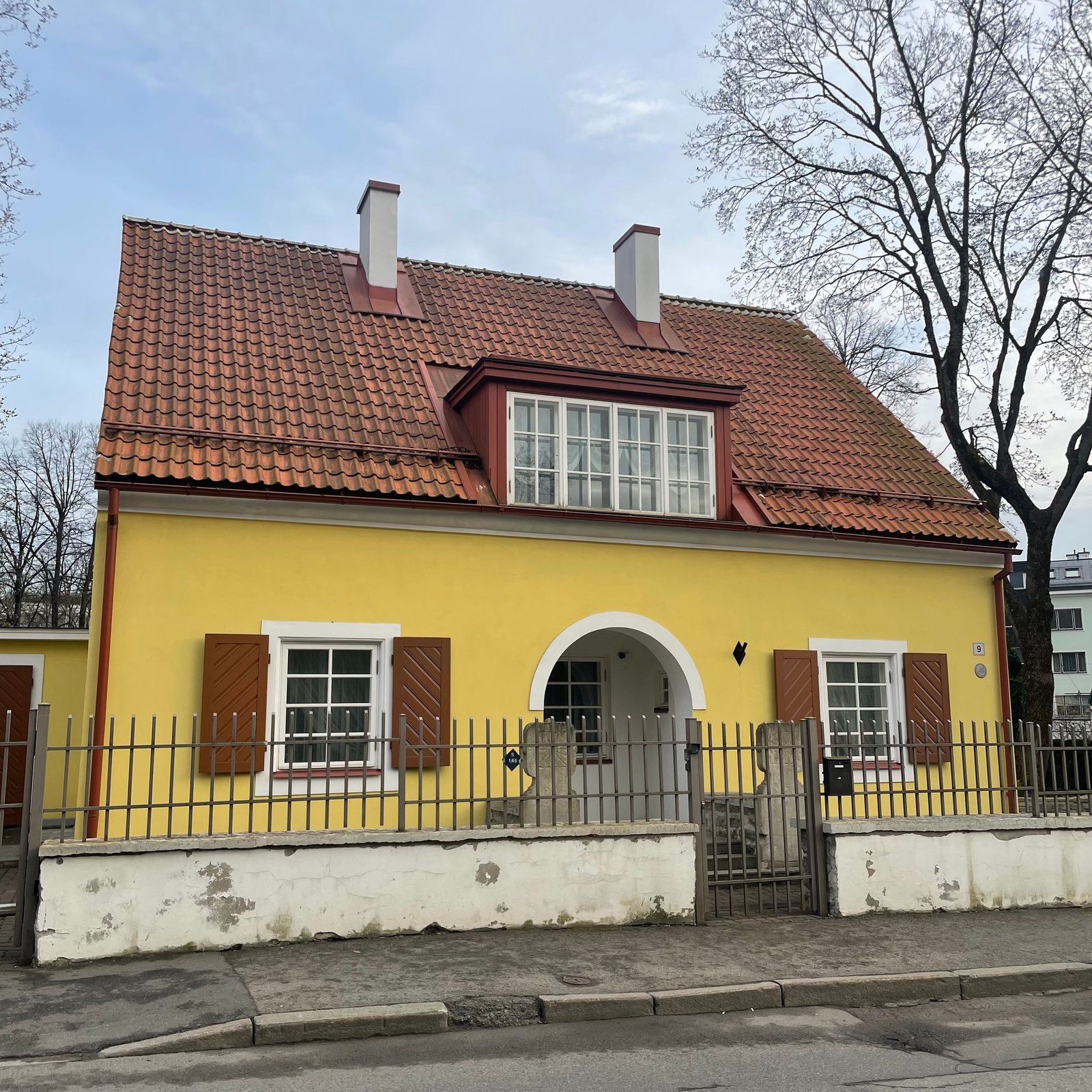
Old farm name, also known as Plaasna (1920-25) and Plasi (1913). Possibly a colloquialization of Blasius (Basil[ius], or Blaise in English), rendered variously as Ulas, Laas, Vlasius or Wlasius.
Põik
Not a street, but a street nevertheless... The word has no cut-and-dried etymology, or even definition. Short for põiktänav, it evolved out of a pool of terms across the FU landscape originally referring to things such as a connecting structural crossbar, or a strip of cloth, or a beam, slat or lath, usually horizontal, hinting at a possible relation to põõnama, to sleep, reminiscent of the Eng. expression ‘to sleep like a log’. Reduced to its simplest, it should be a crossroad intersecting with another street as it is in about 60% of Tallinn’s põigid, while a remaining 40% just wander off with varying degrees of existential clarity of purpose.
Kalamäe soo (Kalamägi)
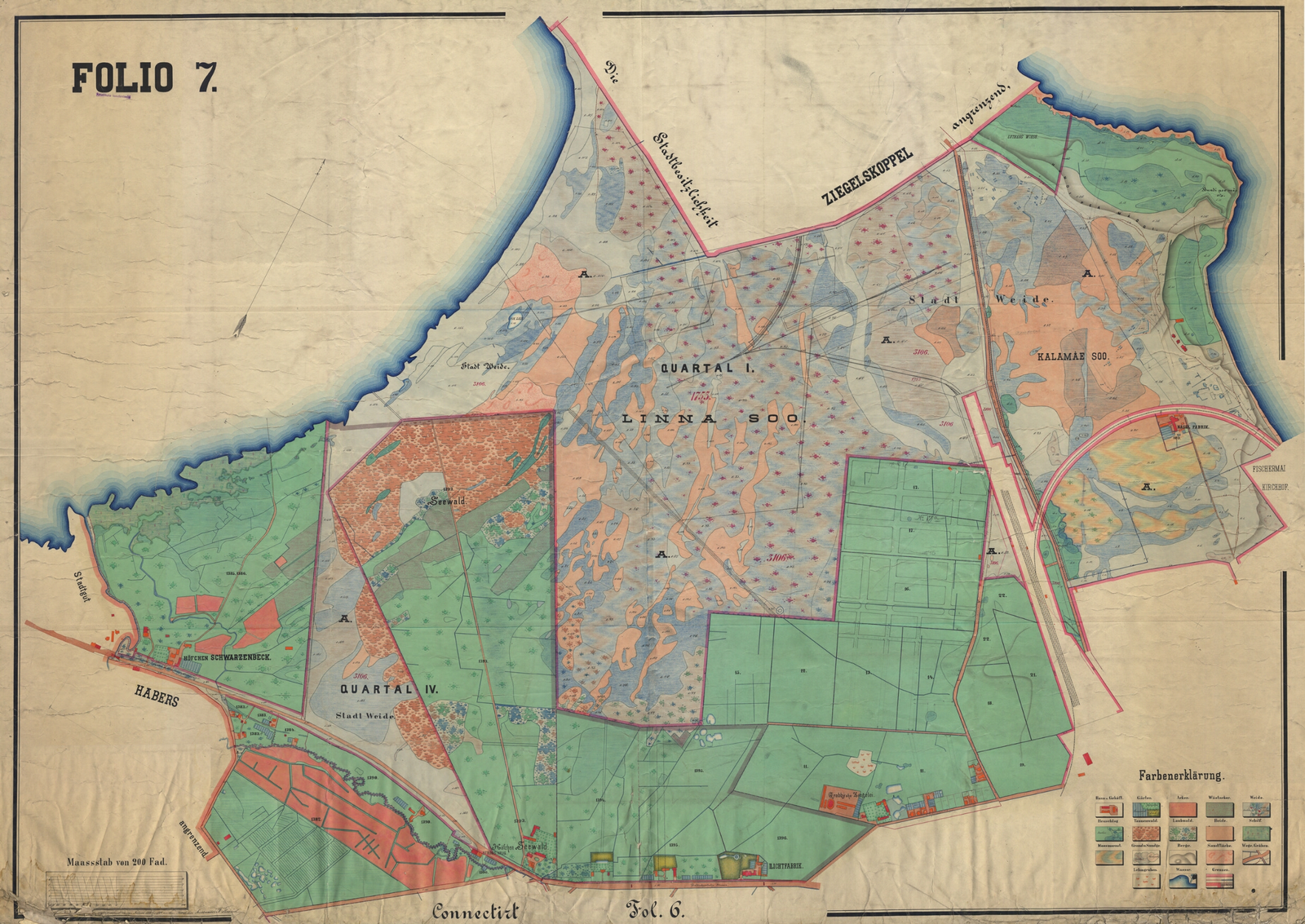
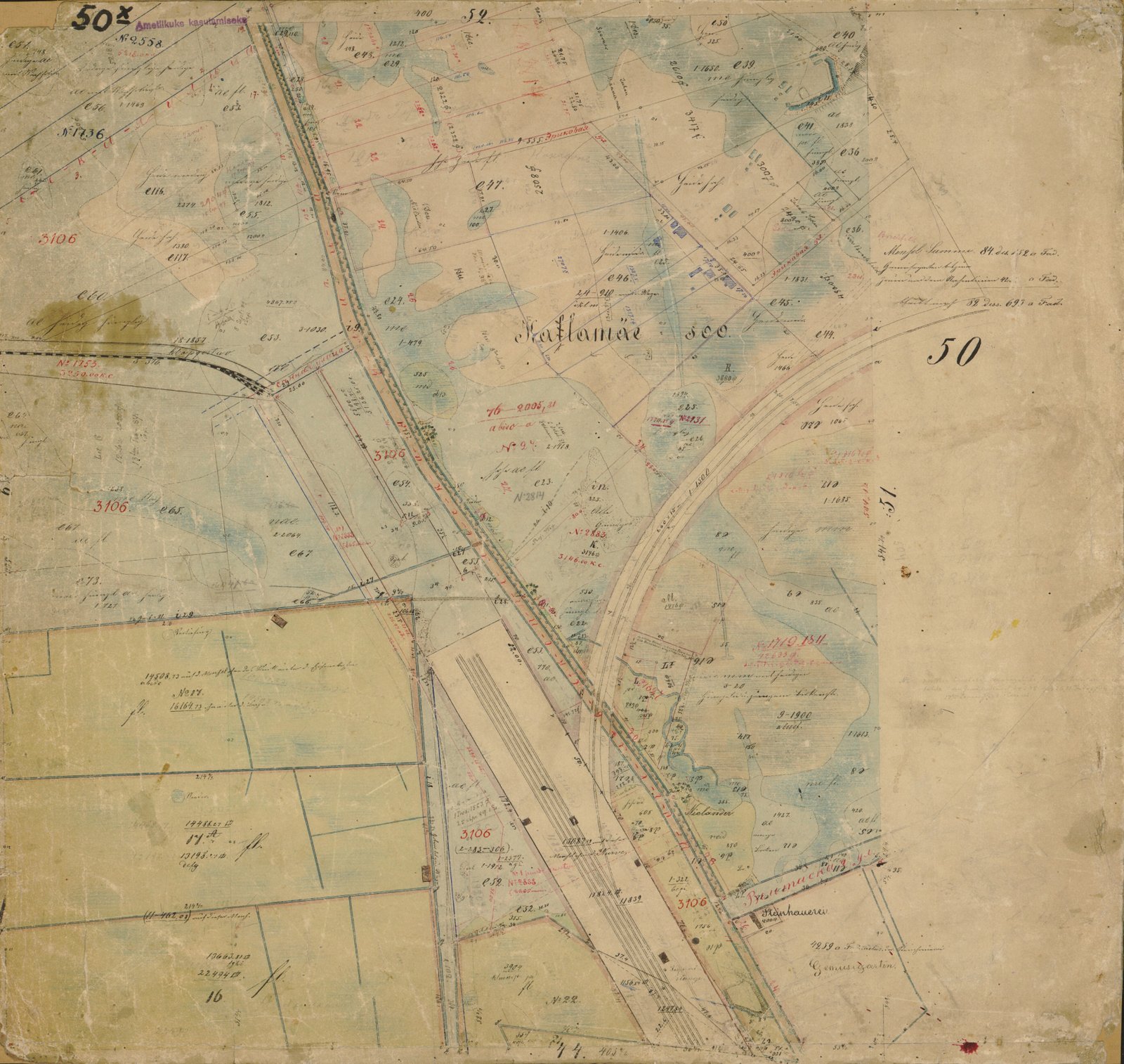
Fish hill/mountain marsh. Not listed in KNAB, but indicated on Johann Friedrich Eurich’s survey map of Tallinn (1880-1882) (top). Since a hill is more or less the opposite of a marsh, and since it was actually located immediately NW of today’s Kalamaja Sub-district, uncertainties as to whether the name was Kalamäe Soo (Eurich) or Kalamaja Soo (Kivi). Sometimes written Kallamäe. (Eurich, again, apparently, bottom map)