
Home
Hõbeda (Hõbe)
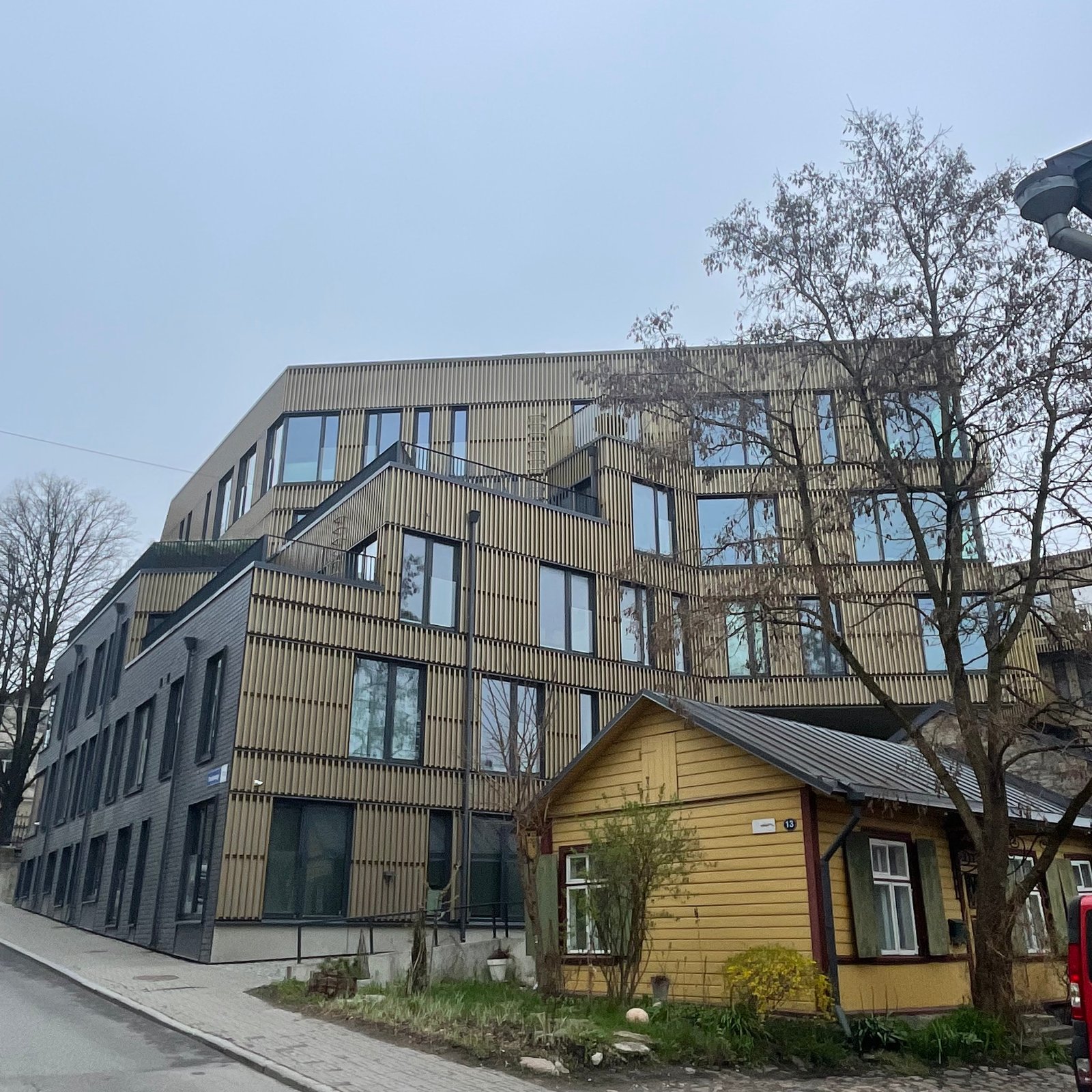
Silver. A metallic neighborhood of Tallinn... See also Pronksi.
Kollane (Adj.)
Yellow. Named after the yellow-painted wooden barracks demolished in 1870. Street names indicated by an adjective (occasionally an adverb or attributive) are in the nominative. As to why, however, it is not quite clear: the street was never entirely yellow in the first place. Perhaps the thought that an adjective requires a noun? Or to avoid the awkward use of a substantivized adjective, ‘the yellow’, or the idea of ‘yellowness’ (kollasuse)? But while ‘yellow street’ is strange, ‘street of the yellow’ sounds strange, and that in itself is a greater wrong to inflict upon an innocent name. See also Punane.
Faehlmanni F.R.
(Friedrich Robert Faehlmann, 1798-1850)
Founder of the ‘Learned Estonian Society’ and originator of the Kalevipoeg idea, converting a rather malevolent giant of Estonian folklore into a king and national symbol. A medic by profession, his 1827 doctoral thesis, Observationes inflammationum occultiorum, or Observations on non-visible inflammations (the squidgy bits), he wrote in Latin. Other papers, such as the page-turning Ueber die Declination der estnischen Nomina (On the declension of Estonian nouns, a copy of which was owned by Napoleon’s linguist nephew Louis-Lucien Bonaparte, known for his almost definitive opus on Basque verbs, but I digress), a topic causing violent baldness in anyone approaching within three yards of it, he wrote in German and, as penance, became reader in Estonian language at the University of Tartu from 1842-50. Faehlman treated a wide range of patients from potatoless peasants to Baroness Bruiningk (1818-53) revolutionary sympathizer and sometime acquaintance of Karl Marx. Gossips have suggested a dalliance between Friedrich and the above Baroness Marie but there is no smoking dress. Squidgy bits and Estonian declensions have rarely been conducive to ripping off your clothes and getting down to it.
Aedvilja (Aedvili)
Vegetables, greens, after a large market garden nearby in the 19th C or earlier. Formerly recorded as Aiavilja (same thing?) (1908-1938) and Galkini (1870-1882) after Mikhail Nikolaiyevich Galkin-Vraskoy 1834-1916 (Михаил Николаевич Галкин-Враской), head of the Governorate of Estonia from 1868-70. Temporarily known by the bilingual Estonian-Russian concoction of Põik uulits (±cross-street road, 1885), but the eat-your-veggies connection kicked back in in 1882 with Gemüsestraße and Овощная ул., the translations of which I’m sure you understand.