
Names
Diakonissa (Diakoniss) 
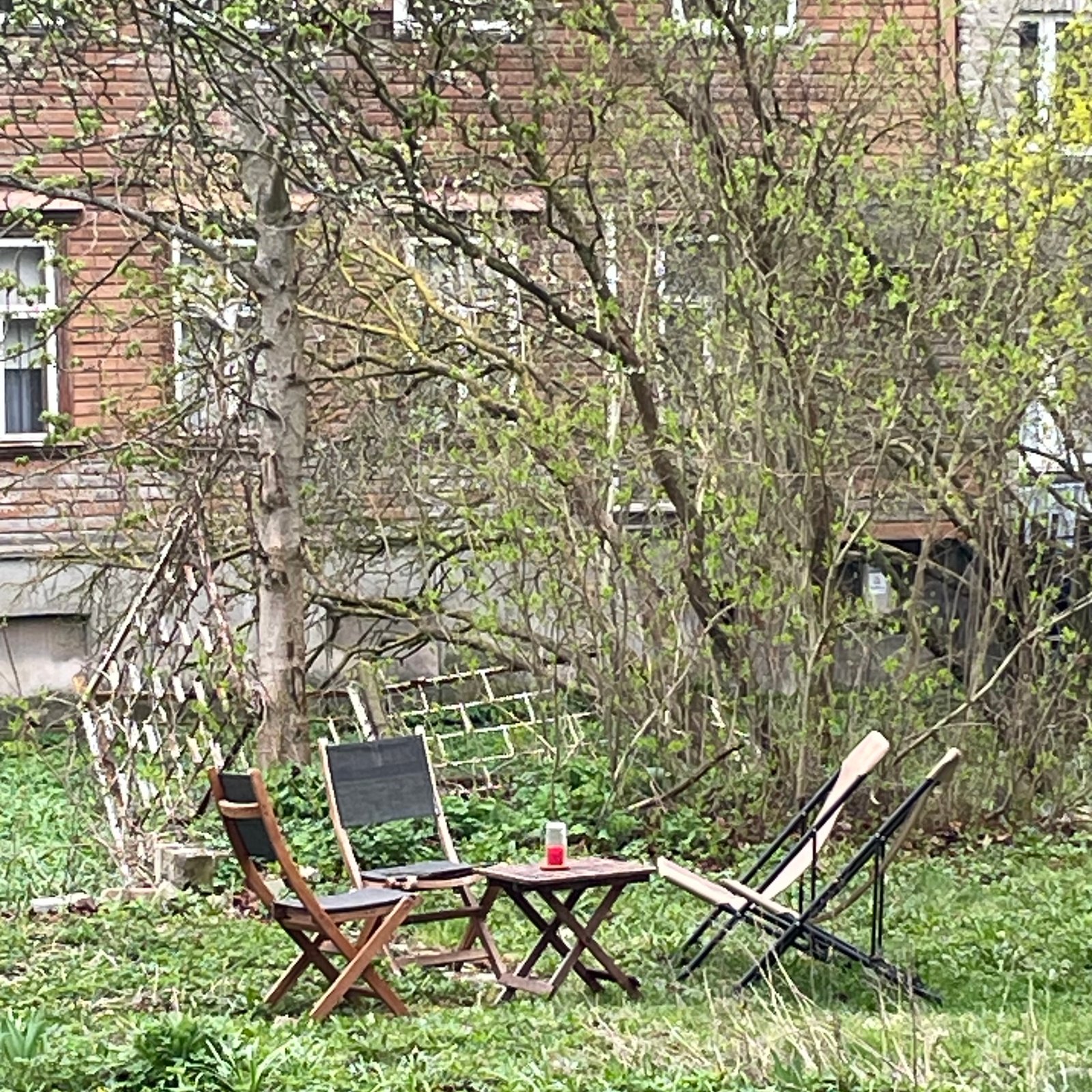
Deaconess, after the Diakonisside Asutis (Ger. Diaconissen Anstalt) or Deaconesses’ Home, hospital, nursing-home, orphanage, asylum for the mentally ill, etc. Orginally in Luise in 1867, later moving to Pärnu where it remained until 1914, eventually merging with Magdaleena in 1990. Now a park next to the hospital.
Dominiiklaste (Dominiiklased [pl.])
Dominican friars (Sing.: Dominiiklane), see Katoliku hoov. Neither this location nor the next, Dunkri, appear in Kivi’s Tallinna Tänavad of 1972. Although today this is a hoov (from Ger. Hof, courtyard), it used to be an õu (prob. an FU word for door or gate, e.g. Finnish & Karelian ovi; Mansi āwi; or Votic övvi, courtyard; etc.) from 1970-80. Not quite sure what the difference is: both may be translated by courtyard, but perhaps, like the English dyads of bull and beef (from French bœuf), sheep and mutton (Fr mouton), etc., the foreign (read invader and consequently aristocratic) label gave greater percieved psychological value. Although the õu may reflect a social reclaiming of Estonian heritage instead. Remember too that for many years ‘non-German’, Est. mittesaksa, Ger. undeutscher, was a term reflecting inferior status, generally of Estonians, but possibly other outsiders too (Russians, Finns, Swedes...). For example, members of the merchants’ guilds, Germans almost by necessity, forbade its members to marry Estonians, and while German was believed to be one of the 72 languages remaining after the fall of the Tower of Babel, Estonian was, I think, not.
Dunkri (Hans Dunker, 16th C)
Although Dunker is an old Germanic name for someone who lived near a swamp – historically, pretty much applicable to anyone in Estonia – it seems this was a 16th‑C merchant, originally from Lübeck, prime city of the Hanseatic League, as well as Tafelbruder (see Eppingi torn) and/or alderman. Having been the street’s name for the past 400-odd years, it has inevitably been wrangled into cosier interpretations: Drunckerstraße (1528), possibly, but not 100% sure, ‘drunkard’s street’, the word was sometimes used for ‘drunk’ at about that time, along with drunkener (1400-50), drunkerner (1501) and drunck (±1600); then Dunkelstraße or Темная ул. (Temnaya), dark street (1701, etc.), and whatever the Estonian frontal cortex believed Tunkle ulits (1732) to be. Renamed during the Soviet occupation as Vilde E. (1950-1963) then Vana Tooma (1963-1987). Prior to all this, things get a bit muddled, causing many a sleepless night... Its earliest date (1378) is given by Kivi who says it was known as platea qua itur ad sanctum Nicolaum in opposito putei, or road which goes to Saint Nicholas’, passing by the well (möödudes kaevust) but this looks like a mistake. The main source material here is Nottbeck III II, and my take on this, and I could be wrong, is that Nottbeck was describing the location of a property “opposite the well on the road to Saint Nicholas’”, a point he emphasizes by his comment in the appendix, vielleicht derselbe (perhaps the same one), presumably the Rataskaev well. In which case the platea would refer to Rataskaevu, not Dunkri. In 1439, it was recorded as klene strate bi den sc(h)oboden, alse men geit na deme sternssode, little street near the shoeshops (for more on these, see Raekoja plats) by which you go to the sternssode, and in 1443 as (lutke) strate achter der munte, (little) street behind the mint, logical since by then the mint was at Niguliste 6, stretching north to abut onto Dunkri. However, in the 2nd half of the 15th C, the name started shifting again, and now it seems definitely along the lines of Sternestrate achter munte (1463), sternestrate (1469 & 1489), and strate achter der munte (1478), all variations of sterne street behind the mint, the sterne coming from the name of the well in Rataskaevu.