
Names
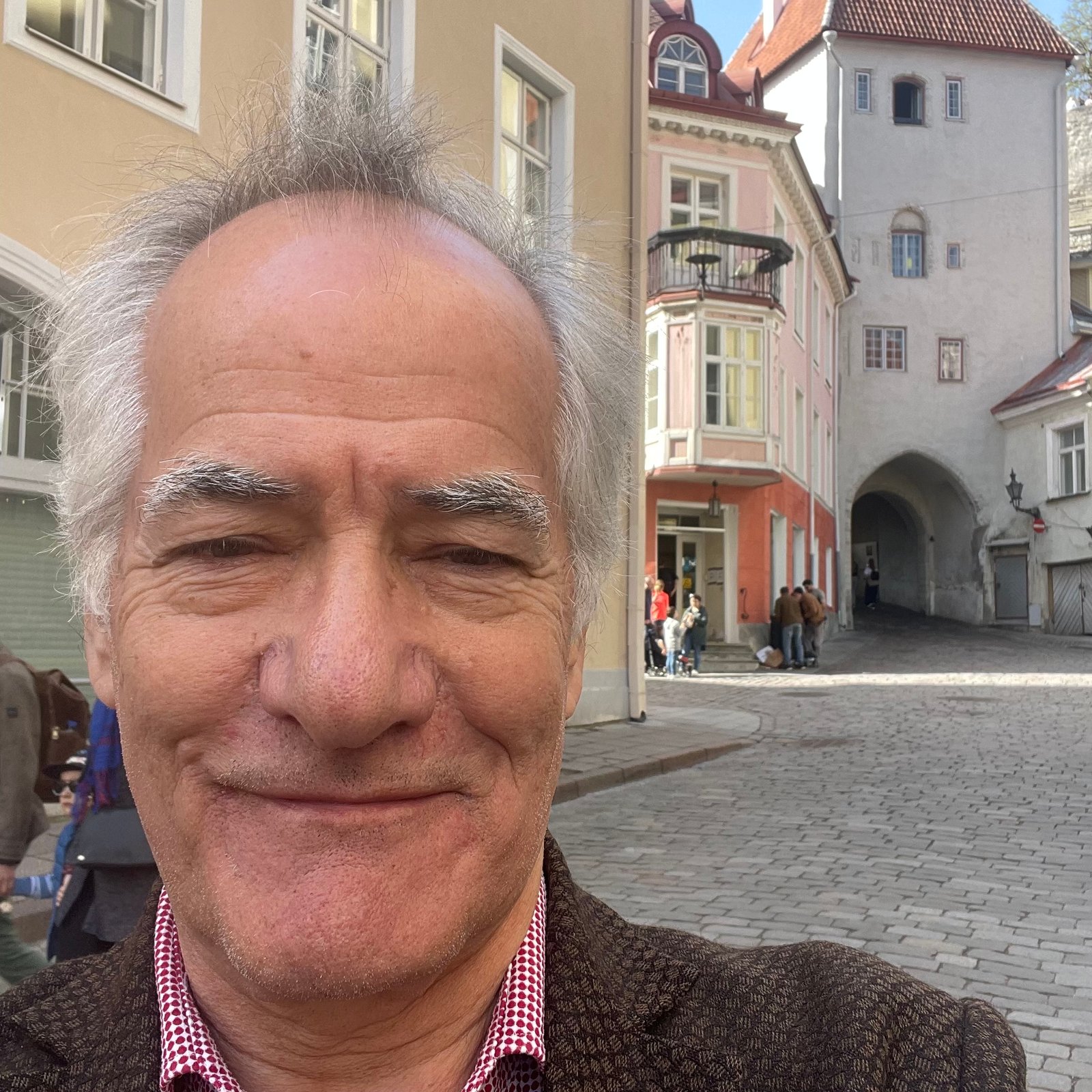
Bremeni torn (Bremen) 
Bremen, former Hanseatic town in Germany. But apparently its original name might have been Bremertorn after a local resident (or a documentary misreading?). Bremeni torn was a prison in the mid 15th C, known then as Bremen de vangen torne (Bremen the prison tower), and used thus until the 17th C. See also Eppingi torn.
Brookusplats (0)
Brookus square. Latinized name of Brockhusen, name associated with ownership of various properties in the northern end of Tallinn old-town (Pikk, Lai, Laboratooriumi...). Various candidates: Kivi suggests an 18th-C alderman Volmar Brockhusen which matches the earliest recorded use of the name for nearby Olevimägi – der Brocks-Berg and its old-style Estonian spelling of prooks mäggi – in 1732, but while Tallinn archives have a testament of another Volmar Brockhusen dating back to 1548, the KNAB has no relevant records for the 200 years following the previous local naming of nearby Sulevimägi, de Iseren Dore, i.e. 1529-1732. Either way, the name has a long and somewhat mongrel pedigree. First, given the spelling variations in the records (e.g. Bruckhusen, Brůckhusen & Bruckkusen) and the actual place name, it could apply to a variety of local landowners. In Nottbeck, for example, a transcription of early records rife with erratic spelling, the names Johannes Brüker and Johannis Bruckhusen are both mentioned for 1383, and the same Brüker (?) was written Broker, Bruker and Brůker between 1376-86. The earliest record seems to be 1319 for Ludolph Brogere and his son Nicolaus. Without allowing my neck to go full-turtle, it is possible that the name of the locale reflects a family rather than a specific person, but without clearer records, hard to say.
Charlottentali (Charlottental)
Park named after what is said to have been a manor named variously Charlottentali or Scharlottentali mõis, Шарлотенталь Дача (Charlotental dacha), Eggersi mõis and Natalienhof, located in Kristiine or perhaps spilling over onto Mustjõe, and dating back to the 18th or 17th C according to source. None of these details are listed in mois.ee, the most reliable source on Estonian manor houses. The same name was also used for the Charlottentali tikumanufaktuur, or Charlottental match-factory, located on the now non-existent Kullamaa. As to who the actual Charlotte in question was – don’t bother asking ChatGPT: “information … not supported by verified historical sources ... I apologize” – your guess is as good as mine… But a likely candidate is Louise Charlotte of Schleswig-Holstein-Sonderburg-Augustenburg, mother of Peter August, Duke of Schleswig-Holstein-Sonderburg-Beck, Governor General of Estonia (1758-1762) and, incidentally, ancestor of the UK’s Charles III.
De la Gardie (?)
Aka Delagardie. Two main contendors: 1) Pontus de la Gardie (1520?–1585) originally Ponce d’Escouperie, left France in 1565, mercenary for Denmark, captured by Swedes, switched sides, became Pontus de la Gardie, married Sofia Johansdotter, illegitimate daughter of king Johan III of Sweden, became Governor of Swedish Estonia (1574-1575), captured Narva from Russia (1581), re-Governor of Swedish Estonia (1583-1585), drowned in Narva River, buried in Toom-Kirik. No street named after him, just a shopping center in Viru tänav although there was a redoubt in his name on one of the south-east city walls ca. 1710. And 2) Magnus Gabriel De la Gardie (1622-1686), his grandson, Lord High Treasurer of Sweden (1652-1660) and Governor-General of Livonia (1649-1651) with many an ‘etc.’ between, as well as Count of Kuressaare responsible for building the town’s Town Hall and, rumor has it the weighhouse (vaekoda) on Saaremaa (probably him).
Diakonissa (Diakoniss)
Deaconess, after the Diakonisside Asutis (Ger. Diaconissen Anstalt) or Deaconesses’ Home, hospital, nursing-home, orphanage, asylum for the mentally ill, etc. Originally in Luise in 1867, later moving to Pärnu where it remained until 1914, eventually merging with Magdaleena in 1990. Now a park next to the hospital.
Dominiiklaste (Dominiiklased [pl.])
Dominican friars (Sing.: Dominiiklane), see Katoliku hoov. Neither this location nor the next, Dunkri, appear in Kivi’s Tallinna Tänavad of 1972. Although today this is a hoov (from Ger. Hof, courtyard), it used to be an õu (prob. an FU word for door or gate, e.g. Finnish & Karelian ovi; Mansi āwi; or Votic övvi, courtyard; etc.) from 1970-80. Not quite sure what the difference is: both may be translated by courtyard, but perhaps, like the English dyads of bull and beef (from French bœuf), sheep and mutton (Fr mouton), etc., the foreign (read invader and consequently aristocratic) label gave greater percieved psychological value. Although the õu may reflect a social reclaiming of Estonian heritage instead. Remember too that for many years ‘non-German’, Est. mittesaksa, Ger. undeutscher, was a term reflecting inferior status, generally of Estonians, but possibly other outsiders too (Russians, Finns, Swedes...). For example, members of the merchants’ guilds, Germans almost by necessity, forbade its members to marry Estonians, and while German was believed to be one of the 72 languages remaining after the fall of the Tower of Babel, Estonian was, I think, not.