
Names
Raua K. (Kristjan Raud, 1865-1943)
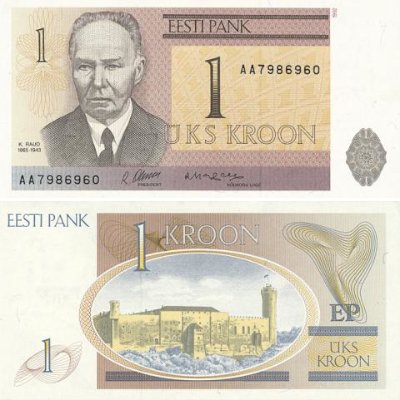
Painter and illustrator of folklore characters and bizarre mystical phenomena such as flying lakes (given the country’s average rainfall, perhaps not that mythological at all). Best known for his depictions of the Kalevipoeg, see Kalevipoja. The 1935 edition being (then) an almost must-have in every Estonian home. His cheery face adorned the 1-kroon note (for information on Estonian currency, see Krooni).

Raudalu (Raudalu)
No street, Sub-district only. In the early 19th C, there was a street called, indiscriminately, Raudalsche Straße, Raudarrosche Straße and Rappelsche Straße. While you can discern the original destination in the last German name, in Estonian it stands out loud and clear: Rapla. The contemporary Estonian counterparts Raudalu and Raudaru were after a local inn called Raudaru Kõrts (from raud: iron + aru: meadow, see Raua and Aru, but why?), aka Uerist (1798, but why’er? It sorta sounds like a mispronunication... although it could also come from ‑vere, see Aedvere), or Raud Arro (1725) in German and Raudorakrog, etc. (1697) in Swedish. Confusion was a no-brainer. Name changed in 1949 to Viljandi to which it also leads, if you have the time. Last word?... Arro is and was a common-enough surname and the original name may well have been based on ‘Arro’s smithy’.
Raudosja (Raudosi)
Rough horsetail, aka scouring rush, or scouringrush horsetail, Equisetum hyemale. New street next to Osja.
Raudsüdame (Raudsüda)
Lit. Ironheart. The geological name of an approx. 20-cm-thick Estonian limestone bed from the Darriwilian (Middle Ordovician), dating back to 462.6 to 463 Ma, known locally as the Lasnamägi Lade (Lasnamägi Stage). New street in Uuslinn, named for the limestone mined in the former Lõunamurd quarry (lit. south quarry) south of Laagna tee. See also its geologically younger counterpart Muldvalge.
Raunjala (Raunjalg)
Lit. (at) the foot of a heap of stones. One of the Asplenium family, a fern better known as spleenwort and used to treat, yes, the spleen, but also believed to cause infertility in women. Three species common in Estonia:
- Pruun raunjalg, maidenhair (lit. brown) spleenwort, Asplenium trichomanes
- Müür-raunjalg, wall-rue (unrelated to actual rues), A. ruta-muraria
- Põhja-raunjalg, northern or forked spleenwort, A. septentrionale
Street-name short-listed some years ago along with Kilpjala for Käokõrva, but failed to make the grade, and revived (on paper, only?) in 2023.