
Home
Tendri (Tender)
Tender, the wagon behind the locomotive, carrying coal, other fuel or equipment. ‘Street’ renaming the former SW section of Veduri. In fact, just a gravel path from Auru connecting with Söe by a 10-plank wooden footbridge. One of a small locomotive-themed group next to Tallinn-Väike station.
Löwenruh’ (0)
The sorry equivalent, if not archetype, of “Dunroamin’”, roughly translating as The Lion’s Rest. Park in Lilleküla named after the summer estate of Friedrich von Löwen (1654-1744), Governor of Tallinn from 1728-36.
Nõelasilm (0)
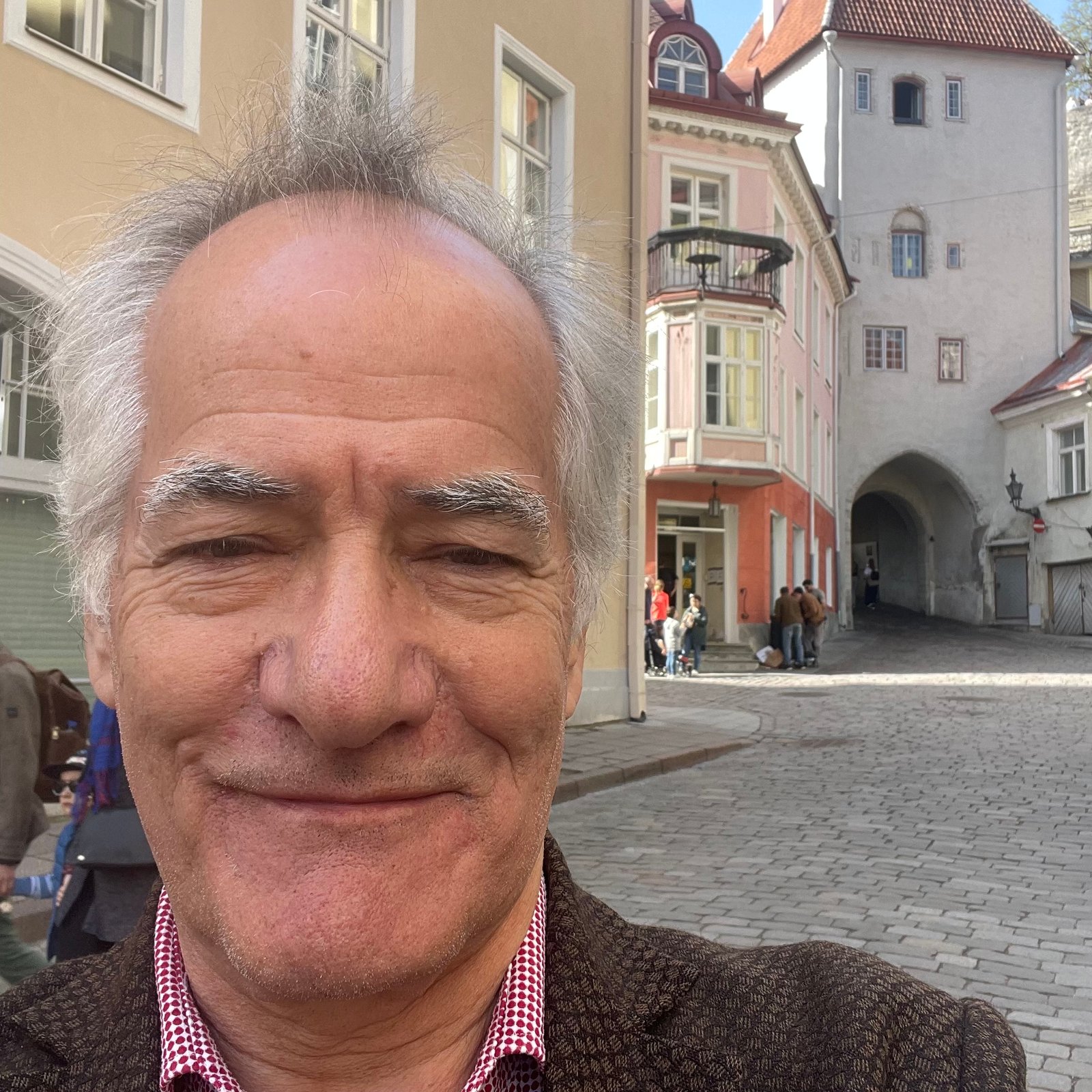
Eye of the needle. Portal at the end of what used to be a narrow street significantly enlarged by the March 9th 1944 bombing (see Harju). The Estonian name seems to be a curtailed translation of the Latin acus episcopi, where acus means needle or, by extension, eye of the needle, likely a calque on Bremen’s oldest gate, Die Natel (MLG de Natlen), aka Bischofsnadel (Bishop’s Needle) or Bischofstor (Bishop’s Gate), built sometime in the early 1200s. Being its first city gate and probably relatively small, earliest records (1274) already suggest it was designed to hinder military forces from entering the city (pretty much the job of any medieval city gate), with subsequent folk etymology accentuating the narrative to make it so small that even a horse and rider, then knight, could not pass through. And small this one is. Past names include Sunte Nyclawes stegel (St Nicholas’ steps, undated, but prob. oldest), Unter den Linden and Подъ Липовая (under the lindens, 1890), Kirchenstegel (church steps, 1913), etc. Nõelasilm was re-built and re-opened 20 August 2007 and, since the name theoretically applies to the archway itself, the alleyway is sometimes referred to as Trepi tänav, erroneously due to it already existing elsewhere, to be confirmed.
Rataskaev (0) 
Wheel well, well with windlass for winding up water, aka draw-well. A development of the older, true windlass well, võllkaev, which saw various additions over time from the wheel to facilitate rotation to realizing the windlass was not actually needed. For whatever reason, Rataskaev is today the best-known well of late medieval Tallinn, although there were a number of others: one about 100 m due N as the rain falls, next to the Pikk Jalg tower, another in the NE quadrant of Raekoja plats, and a dozen or so strung out along the ‘aqueduct’ or channels bringing water from sources just outside the city walls, running from Harju värav, through Kullassepa, across Raekoja plats into Mündi, Pikk and Lai and all the way to Suur Rannavärav. Given that the channels were built in 1420-23, it may have been due to the wells becoming too labor-intensive or no longer capable of satisfying local demand. The earliest records identifying the well include puteus, dictus Sternsod (‘well, named Sternsod’, 1375); sternsode (1379); and the description platea qua itur ad sanctum Nicolaum in opposito putei (‘road that goes to St Nicholas opposite the well’, 1378, see Dunkri). The consensus is that this particular well has been called Sternsot/Sternsod(e) since 1375 at the latest, and has been accused of various origins. The name breaks down into 2 parts: stern and sod, so let’s start with the first. Modern German Stern means ‘star’, but here it seems to have a different meaning (the use of ‘star’ for multi-street junction does not seem to be very old): from MLG stēn or stêrn(e), i.e. stone and, by extension, calcareous or lime causing the water we now call ‘hard’. So 2 options there, to which we return later. The 2nd part is more complex and seems to bring various etymological strands together. The first one comes from the number of towns in Germany ‘Soden’ in their name, 4 in Hesse and 2 in southern Germany, all known for originating as settlements near a mineral-rich spring. The Hesse dialect sets the stage with Sod or Soden conveying a sense of uprising and welling as in ‘boiling’, ‘churning’ or ‘surging’, but also meaning Ziehbrunnen, or draw-well. Looking at other MLG examples, we have: 1) sōde or soede: a slab of peat or turf; 2) sōde or sodde, ‘boiling’, ‘broth’, ‘spring’ or ‘well’; 3) sōde, a ‘narrow passage between houses’; and 4) sōde, ‘heartburn’. Given the well’s location, No.3 can be dismissed. No.4 is interesting in its sense of warm, surging reflux, but it’s a later (16th-C?) derivative. No.1, with definitions swirling around peat bogs, heating-fuel, and general mushiness, perhaps serves more as a reminder of how words can creep and crystallize into newer or reinvented meanings, or simply mislead due to serendipitous similarity, another way of saying we don’t really know. For some, it may come from 9th-C OHG sou, related to words involving dripping or sucking. As to No.2, the question is: which came first? While the answer may not be known, it is likely that the word designating the founding economical feature, the spring, became enshrined in a more palpable object, the well, in a similar manner to, e.g., Vaksali. Lastly, since ‘spa’ water is often carbonated, this revives the ‘stern’ issue, suggesting a possible related original. To conclude, inconclusively, were it true, a brackish, briny or carbonated spring might be notable and nameworthy but, lacking hard evidence, the most probably explanation is simply that: a stone-built well. Discussion TBC on the website. For information, located at ///unless.friday.greeting. the current well is a replica. For the street itself, see Rataskaevu.