
Names
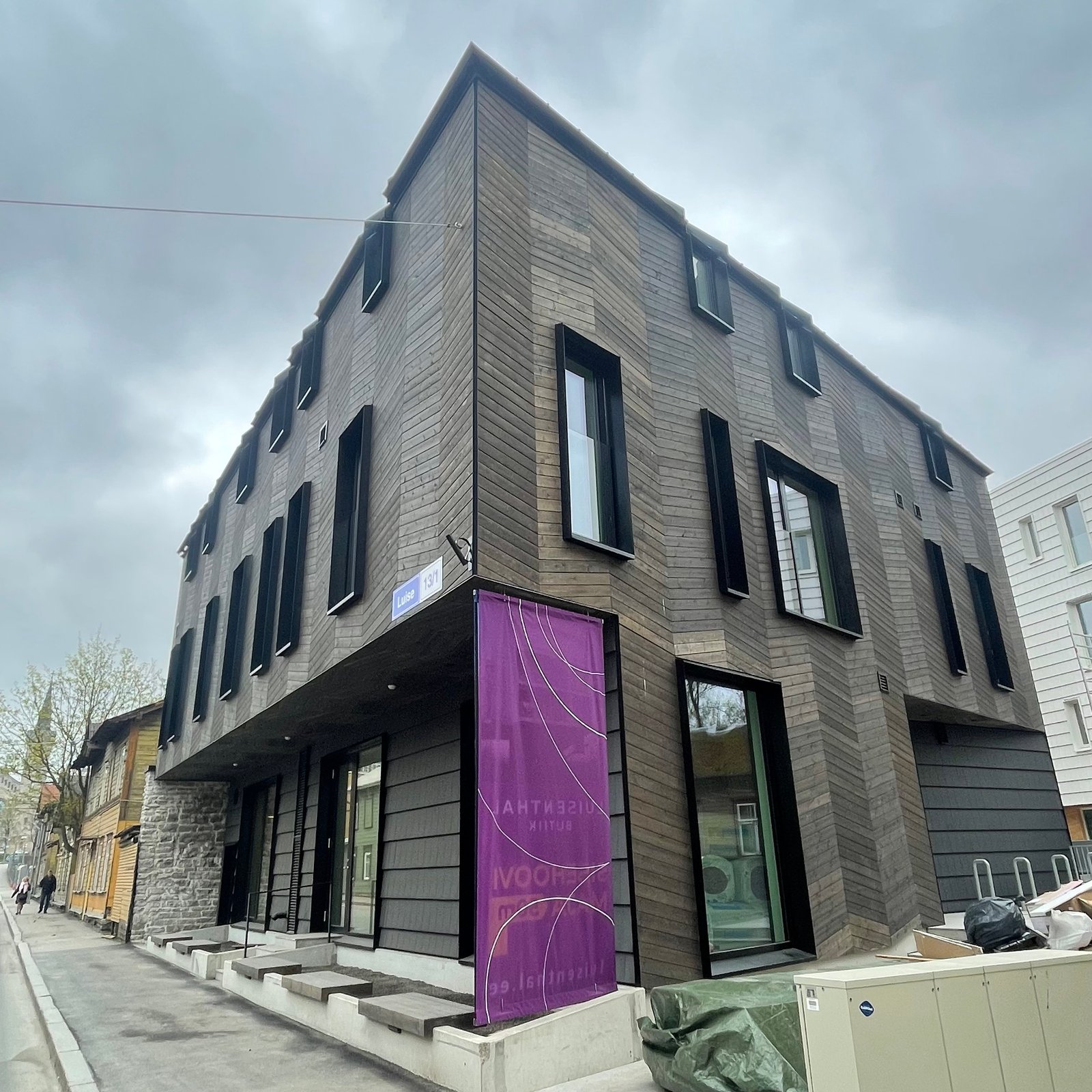
Saue (Sau)
Fine clay, appropriately parallel to Telliskivi, also the name of a town SW of Tallinn. Originally named Lau or Lao, with Lau not as in laupäev (Saturday), a Scandinavian (or MLG) borrowing of uncertain origin implying washing-day (Old Swedish, lögh, bath or bathwater; Old Icelandic, laug, washing-water; MLG lōge, logge, loige, etc., Mod. Eng. lye, the ash extract used for washing, possibly related to Fr. lie [wine dregs] from Old Irish lige meaning ‘layer’ where all these terms share a sense of residual sediment), but after local landowner; and Lao either a simple misspelling or perhaps a name morphing into one more functionally related (see, e.g., Liivalao, geographically far removed but indicating a possible progression in name abbreviation).
Sauna (Saun)
Bath-house, sauna. Street thus-named since the 15th C at least: bastouenstrate (1419) and (the slightly less Scandinavian- and more MLG-sounding) stovenstrate (1420). Word also means small farm or cottage, but this was long before the shift towards steamier haunts. EES suggests an early German origin for the word, *stakka-, giving English stack as in hay and chimneys, which seems vaguely possible, the ‘t’ could disappear, but ‘k’ to ‘n’? Also, Swedish has its own word for sauna, bastu, from bad, bath, and stuga, small house, related to English stove, from early Germanic stubā and stupā, so although the idea of chimneys and smoke may be tempting, an st- start to the word is probably a red (unsmoked) herring. Another EES possibility is its originating in an early Germanic ‘*sāpna-’ for soap (or *saipôn), originally deriving from a term referring to the red substance warriors colored their hair with (presumably to make them look more ferocious rather than alluring) which also gave the Finnish word for soap saippua, but this seems too remote, and *saipôn is already a cognate of MLG sēpe (see Seebi). What appears to be the safest clue is – other than its Finnish, Livonian, Votic, etc. cognates deriving from early Proto-Finnic *sakńa meaning sauna in the broad sense (see above) – its use in Sami languages: suovdnji, hole dug in the snow (by birds, such as the willow grouse) and suodji, shelter, and historical Karelian soakna for “winter dwelling, a pit dug into snow for temporary shelter”, the commonality being a constructed shelter providing warmth. Case still open.