
Names
Saha-Loo (Saha-Loo)
Nothing to do with Saha (above) but refers to the 2 villages of Saha (home to the pre-1241 Saha Kabel (St Nikolaus chapel: ///raindrops.everything.squealing) and ‘sacrifical’ stone (Maardu hiiemetsa ohvrikivi: ///saunters.pokes.springy) and Loo in nearby Jõelähtme (see Kangru). Peat bog and site of fossil fields dating back to mid Bronze Age (14-11th C BCE). And yet another street on other side of the road from Tallinn. Oops.
Saiakang (0)
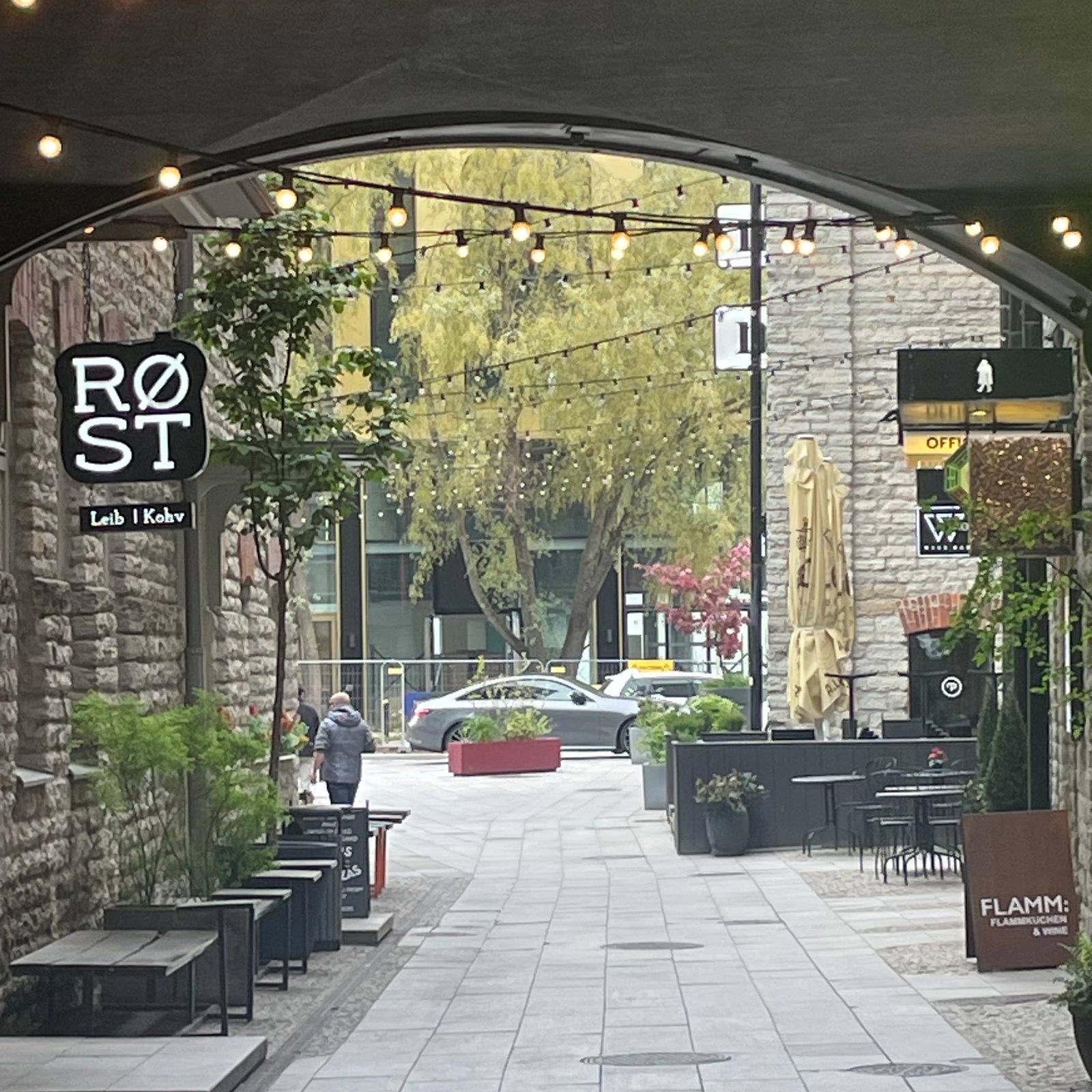
White bread passage / vaulted archway. First recorded in 1370 as iuxta forum prout itur ad sanctum Spiritum (next to the market/square, through which you go to the Holy Spirit) then 1430 gang van hilgen gheste to deme markede wart (passage from the Holy Ghost to the market [MLG wart = -wards in Eng.]). Over time, the passageway has run through a number of names reflecting its raison d’être: bread. Russian: Хлѣбный пер. (Khlebny per., bread lane, see Intro for old Rus. spelling), Булочный ряд (Bulochnyy ryad, Bakery row) and Бабий пер., putting various cats among pigeons where Бабий (Babiy) can be ‘just’ a familiar / dismissive term for women or ‘skirt’, or even designate a housewife’s workspace in front of the stove (cf. Härjapea). German: Der Gang (walk / passage) or Weckengang (20th C, Wecken = various types of currant bun), with des heiligen Geistes Gang (Holy Ghost passage) still used mid-19th C. Estonian: earliest name sai kang (1732), later losing its Germanic consonance and renamed Saia käik from 1950-1987. Shoulda kept it, sounds like ‘cake’.
Säina (Säinas)
Ide (from Swedish id < idh, gleaming, shimmering, etc.) or orfe (from German orvo from Latin orphus, sea fish [cf. Greek ὀρφώς], odd, it being freshwater), Leuciscus idus. Fish of the Year in Austria 2004. German, alongside its own Orfe, may well set the record for alternative names, with at least 46 ranging through Aland, Gängling, Gänzling, Göse, Häwt, Jesen, Juntling, Mähne, Münne, Nennen, Nerfling, Tapar, Topar and all the way to unechter Goldfisch, or unreal (OK, false) goldfish (although multiple local name variants is common to most plants and animals). Spawning occurs towards the end of Q1, with small eggs, ±2 mm, attached to gravel, weed and stones in shallow water. For ecological reasons, swimmers, therefore, beware the ides of March. Part of a fish group. See also Teivi.
Sakala (Sakala)
Former province in southern Estonia, dating back to 12th century. Title of Estonian language newspaper daily first published in Viljandi in 1878 by Jakobsoni C.R.. Street name replaced present-day Pärnu (formerly Väike-Pärnu maantee [1908-1936], and Veike-Pärnu uulits [1885]) in 1936, and flirted (1959-1960) with Ugandi, the name (oddly, never used before or since) of a one-time independent country in the region of present-day SE Estonia with the eminently unpronounceable MLG designation of Uggn. But then again its synonym Ugala was used elsewhere instead.
Saku (Sakk)
1) Tree stump (cf. Sagari); 2) Wisp of straw; 3) Bunch/Cluster of fruit or nuts; 4) Archaic term for bag [curiously, EKSS gives sakk:saki, and both this and its commoner word, kott:kotti, are loans from German: sac (sack, bag) from OHG (see Sulevimägi), and either kuđđan from OHG/OLG(?) or kǖdel (pouch) from MLG, leading to Eng. cod, i.e. scrotum (think ‘codpiece’), and kotti in certain dialects of Finland, land of gender equality: scrotum, uterus or placenta]; 5) More realistically: town close to Tallinn, its brewery and beer. One of the group of streets named for stations on the Tallinn-Türi Kitsarööpa line. See Kiisa.
Salaoja (Salaoja)
Sub-base layer, (lit. secret/hidden) stream. One of the various layers of highway construction allowing outflow of water from beneath the base layer and surface course. Another new (2023) and as yet unbuilt street. Unusual street-name, but kudos to engineers, who once taught us fire.