
Names
Esku (Esku)
Old farm/man’s name. Probably from an early Scandinavian name, Askel, Æskil, Askil, Eskil, Áskæll, Áskell, short forms of ON Ásketill, broken down to mean ‘God’s helmet’ (áss [god], and ketill, [helmet or kettle]). This, in Estonian, became jumalakiiver, prob. from Russian кивер (kiver: shako, itself from the Hungarian for ‘peak’, csákó). Rajandi’s Raamat nimedest (book of names) claims the name has long been used in Estonian coastal areas (probably Swedish). But helmet or kettle?... ON already had a word for helmet (hjálmr). So ‘kettle’ was likely a contemporary or later development as it spread through Scandinavia to mean cauldron, cooking-pot, basin, bowl, boiler (see Katleri), etc. There’s something oddly unquixotic about this! As our hero borrows a barber’s shaving-basin for a helmet, boys will pilfer their mums’ saucepans too, so why then would any self-respecting Norse warrior not nick his missus’ casserole to protect his shoulder-rock, as Norse kennings so poetically describe a head (deadpan humor?). I rest my case.
Estonia (Estonia)
Named in 1923 after the Estonia theater and concert hall, built 1911-13. According to TT, known previously as Peters-Promenade (Peter’s Promenade), Vene turu promenaad (Russian-Market Promenade, but see Viru väljak), Promenaad (Promenade), Der Ring/Ringstraße (Ring Road, or part of it, along with Mere puiestee and others but don’t ask which), Gogoli puiestee (Gogol avenue), Karjavärava puiestee (Cattle gate avenue), Vabaduse puiestee (Freedom avenue), Viruvärava puiestee (Viru gate avenue), and perhaps many, many others. No.11 was the Estonian Red Card HQ. After two of them, non‑Communist footballers would be sent off to Siberia.
Faehlmanni F.R.
(Friedrich Robert Faehlmann, 1798-1850)
Founder of the ‘Learned Estonian Society’ and originator of the Kalevipoeg idea, converting a rather malevolent giant of Estonian folklore into a king and national symbol. A medic by profession, his 1827 doctoral thesis, Observationes inflammationum occultiorum, or Observations on non-visible inflammations (the squidgy bits), he wrote in Latin. Other papers, such as the page-turning Ueber die Declination der estnischen Nomina (On the declension of Estonian nouns, a copy of which was owned by Napoleon’s linguist nephew Louis-Lucien Bonaparte, known for his almost definitive opus on Basque verbs, but I digress), a topic causing violent baldness in anyone approaching within three yards of it, he wrote in German and, as penance, became reader in Estonian language at the University of Tartu from 1842-50. Faehlman treated a wide range of patients from potatoless peasants to Baroness Bruiningk (1818-53) revolutionary sympathizer and sometime acquaintance of Karl Marx. Gossips have suggested a dalliance between Friedrich and the above Baroness Marie but there is no smoking dress. Squidgy bits and Estonian declensions have rarely been conducive to ripping off your clothes and getting down to it.
Fahle kvartal
(Emil Fahle, 1875-1929)
Fahle quarter, not necessarily an official name, but the Fahle Maja (house) and next-door building are so well known they merit an entry to themselves. Built on an original paper mill dating back to 1664 and passing through various hands, the former pulp and paper factory, AS Põhja Puupapi- ja Tselluloosivabrik, was taken over and managed by Estonian businessman Emil Fahle (incidentally, both born and died in Germany) in 1899. Although it may not have been the first, the Fahle Maja itself symbolizes and typifies the old-and-new combination of Tallinn’s heritage-building reconstruction. The building on Tartu, known simply as ‘Fahle’, is now a combination complex for business, accommodation and venues. His former residence is now the Fahle Aed (garden) on the corner or Pirita and Narva.
Falgi
(Hans Heinrich Falck, 1791-1874)
Cabinet-maker, clavier manufacturer, Toompea craftsman’s guild elder, alderman and land-owner. Important agent in Tallinn urban development, involved in planting thousands of trees in the mid-1800s to stabilize the sandy earth, building Toompea tänav, and other incentives. First known as Falckensteg (Falck [foot-]bridge) in 1882 and moving through a variety of Russian names including, first, Фалькенштегская ул. (Falkenstegskaya), Фалькскій подъемъ (Falkiy ascent) and Соколиный спуск (Falcon descent, date uncertain, poss. a misinterpretation of the above Falkensteg [i.e. without the ‘c’] or typical Soviet repression), but also, in part, Балтийскопортский подъем (Baltiyskoportsky Rise), this being during the building of what is now Paldiski maantee. Collectivized (1948-1989) along with Komandandi under the name of Nõukogude during the days of wine and roses.
Falgi õu
(Hans Heinrich Falck, 1791-1874)
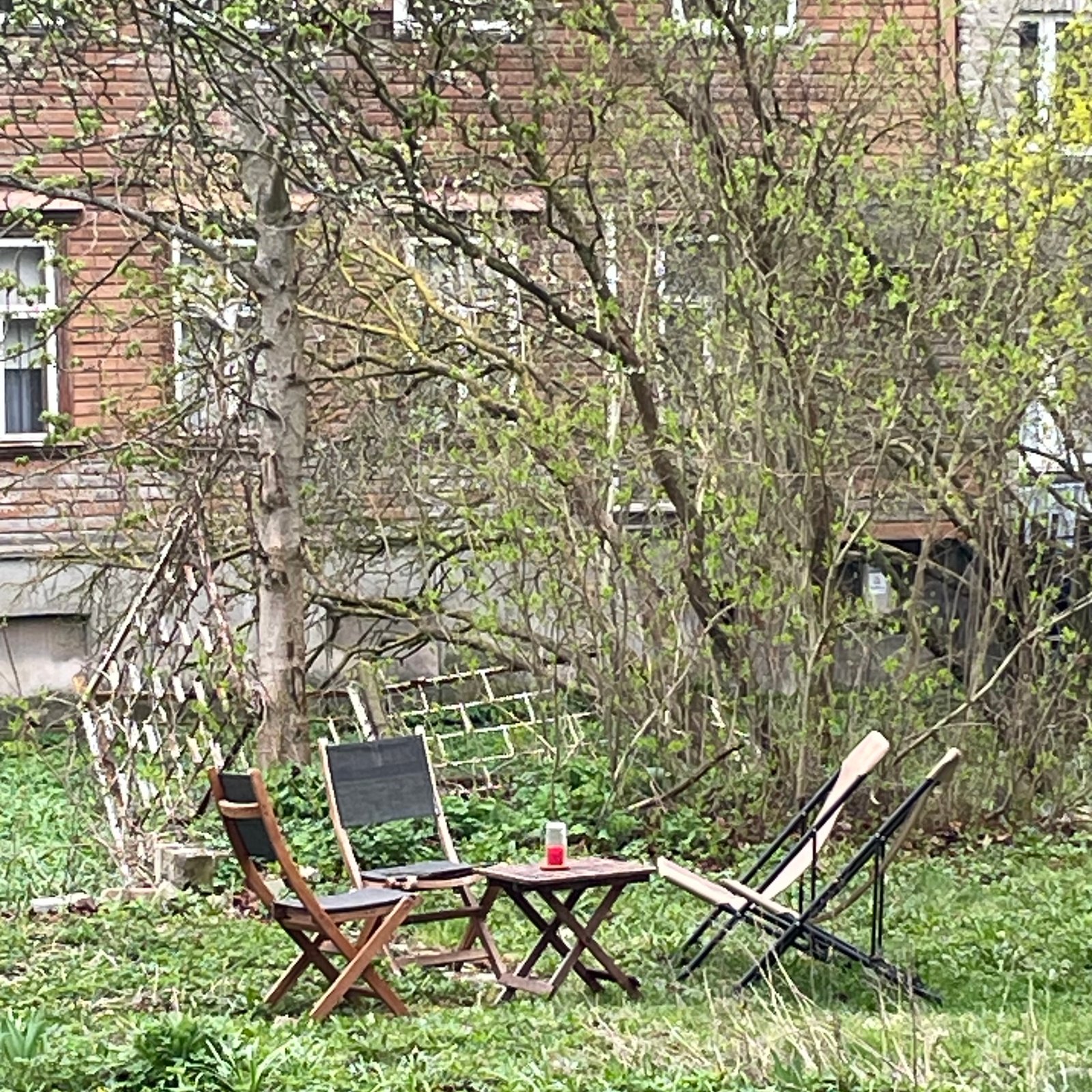
The call it a haljasala, or green space, which it sort of is, but it's more a secret garden off various beaten tracks below Pikk Hermann, close to Šnelli tiik and worthy of at least a cursory visit. See main article: Falgi.