
 Lasnamäe (Lasnamägi)
Tallinn District, largely consisting of acres of workers’ housing, often post-70s-built neo-‘Khrushchyovkas’ (хрущёвка: khrushchyovka, punning on the Russian for slums, трущобы, trushcheby), reputedly tatty, cheaply-built, paper-thin-walled, 6m²-per-person apartment blocks, although some people say actually very well built (as an aside, those built for dock workers in Klaipeda, Lithuania, in the 1960s and scheduled for demolition 20 years later, are still going strong today). Region inhabited since ±3000 BCE, site of corded-ware settlement (aka Battle Axe culture or Single Grave culture). Area used for windmills dating back to middle ages (lasn:lasna is a baker’s ‘peel’ or wooden shovel, but this is a red herring). Earliest records give Lakederberge (1370), Lakederberg (1371), or Lakeden berghe (1372), Laegberg (1697), Der Lacks Berg (1768) continuing to Laaksberg (1893) and Laksberg (1907) before being Estonianized into Lageda mägi. Another variant of the name seems to be Laagna mäe. Various interpretations of the name come to mind:
- ‘Brine hill’: brine in German is Lake, from MHG lāke or MLG lacke, and brine is an important preservative of fish. Brine is usually made by evaporation, and a windswept hill would be an ideal place to do so, but a number of details argue against this: a) In a heavily-wooded country, might it not make more sense to use log-fires close to the source of fishing (the sea) for evaporation? b) How do you get the salt water up the hill in the first place? c) Does it never rain in Estonia? d) Didn’t they import some 90% of their salt from Portugal anyway? And e) Other than this, convenient though it would have been, no geological activity in the limestone plateau since the postglacial rebound of Fennoscandia (see Liiva) creating a ‘brine spring’ is known.
- ‘Salmon hill’, salmon in German is Lacks, from MHG lahs and MLG las, but a) the ‘k’ sound is missing; b) anadromous fish stocks had been depleting since the 6‑10thC; and c) as late as 1695 salmon represented less than 1% of catches anyway.
- ‘Puddle hill’, from a W Estonian dialect laks for loik, puddle or sump. Nope.
- ‘Marsh/Swamp hill’, bit of an oxymoron, but another of MLG lacke’s acceptions is indeed marsh or marshy meadow.
- A fifth possibility is a name derived from an ancestor of German Lager, not in its sense of ‘storage’ and certainly not ‘beer’ but rather Ort zum Liegen (lit. place to lie/lay) from MHG and MLG leger or lēger. Among its various acceptions are those of Grabstätte (grave), Belagerung (siege) or plain Lager (camp, military or otherwise). Since the first mention of Lagedi Mõis was that of Lakethe in 1397, just 54 years after the Jüriöö battle of 1343, this leads to 2 suggestions:
- A possible reference to the camp next to a large bog (see bullet point 4) the Estonian army used before their treacherous defeat in the battle which later became known as Sõjamäe,
- Or, following the death and possible mass burial or simple exposure of corpses of some 3000 Estonians, the location (perhaps some 5 km away) could have become known as ‘Graves’, which would sound vaguely right in a mix of early German and Estonian, and may well have given Lakeder. The notion of violence within the name could be supported by the variety of dialect uses of the word laks: blow, hit, jab, kick or strike (all dialects), whip or lash (W or island dialects), or even mound, pile of, lots of (scattered, more southern dialects).
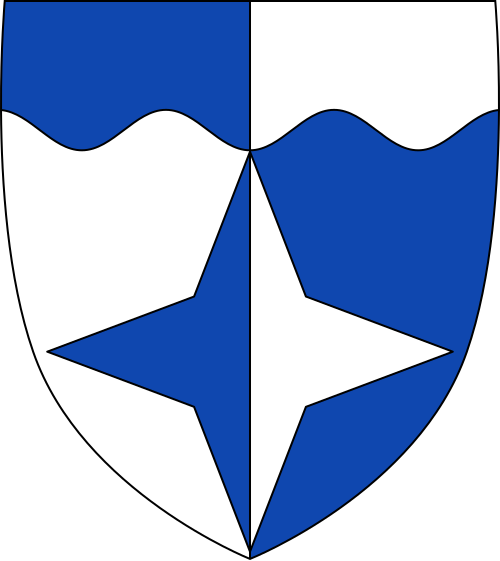
Read this as an under-informed and decidedly open question, there could be many other reasons, ones not even touched upon. See Mäe for comments on the ‘hill’ designation (this peak peaks at 24.6 m). Lasnamäe is one of Tallinn’s 8 Districts (Linnaosad). It includes the following Asumid (Sub-districts): Katleri, Kurepõllu, Kuristiku, Laagna, Loopealse, Mustakivi, Pae, Paevälja, Priisle, Seli, Sikupilli, Sõjamäe, Tondiraba, Uuslinn, Väo and Ülemiste. See Mustamäe.