
Õismäe (Õismägi) 
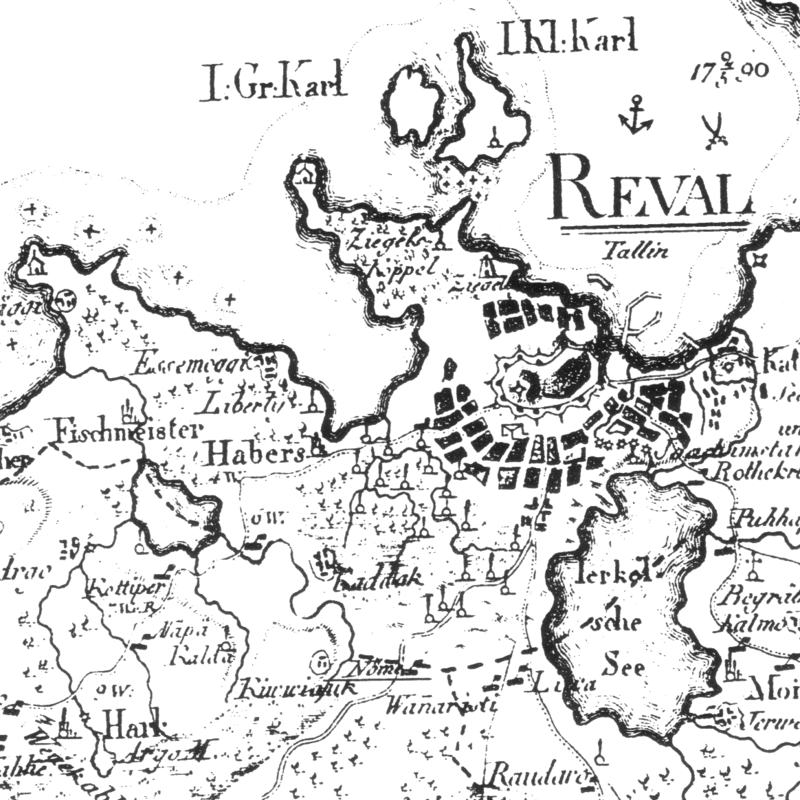
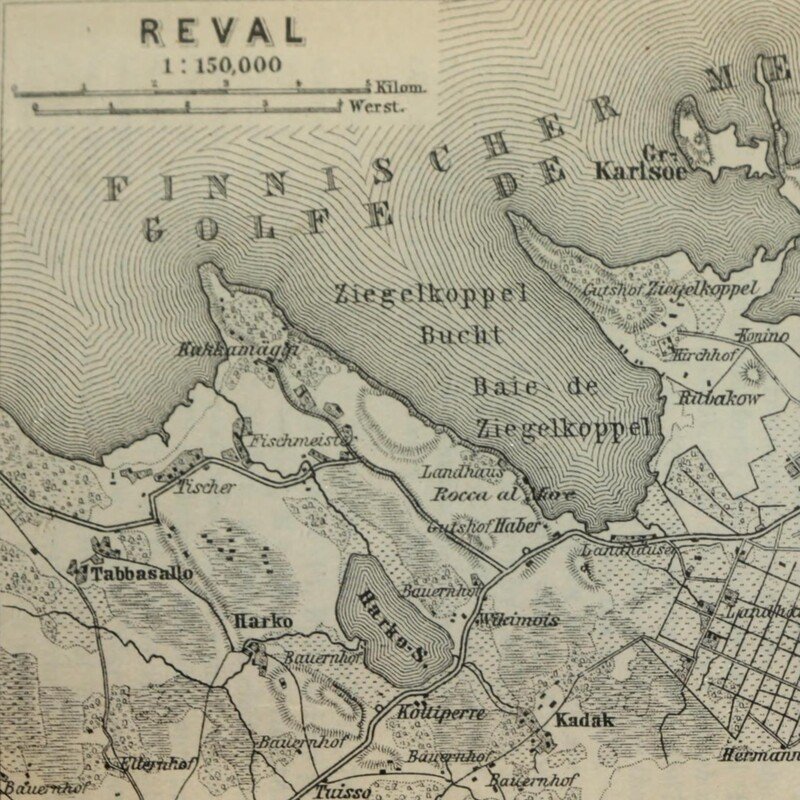
Lit. Flower/Blossom hill. After a historic Haabersti estate, and probably nothing to do with flowers at all… First recorded as Heuschlag Heise Nehm, it looks odd. Starting at the beginning: Heuschlag is an outdated word (even my Haensch-Haberkamp – translator brag – doesn’t have it). Literally a hay-strike, its closest companion in meaning is Old Eng. ‘mede’, giving Eng. ‘meadow’. This conflicts with certain 19th-C maps indicating the same land as either Heuschlag or Weide (pasture). But since Waxelberg’s 1688 map indicates the former with owners’ names and pasture was often common land, we can go with ‘meadow’. Heise is trickier. It could refer to a person: DEPn hints at Heysze Pattiner, mayor of Tallinn in 1516, but it could refer to any other person of that name. It also means the handle or ‘ear’ of a vessel or container, and if MLG Nehm is equivalent to Est. Neem (see Neeme), it could refer to a particular-shaped headland. Could. Kivi was the first to associate Õismäe with Heuschlag Heise Nehm given in the Landtbuch der Stadt Reval (Tallinn land registry), as does DEPn, possibly (or in part) due to its name foreshadowing its later Eismeggi and Eisneme. The Landtbuch does not seem to have an entry for the date usually quoted, 1646, but it does for 1631, and this is where it gets interesting. The entry in question concerns the rightful usage of meadows and the Heuschlag Heise Nehm is associated with the ‘Siechen- und Laddienpehische Heuschlege’ (invalids’ and Laddienpe meadows, see Lahepea). Siechen, from siech (ailing) is often associated with and translated as leprosy (see Jaani seek) which, back then, it may well have been. Leprosy, however, was often confused with tuberculosis, TB, better known as scrofula, the ‘king’s evil’. One Est. term for leprosy was pidalitõbi (from pidali, spital, short for Hospidali; and tõbi, disease or evil, suggesting a long-term ‘in-patient’ disease, cf. Finnish dialect topi for lung disease); while its Ger. equivalent, Aussatz, derives from its more literal meaning of outcast, i.e. shunned or being a pariah. So it could be either. Heise, on the other hand, notwithstanding the interpretations given above, could also mean hoarse or even unclean, and while the former may not be a common symptom of TB in itself, coughing is. The data are sparse and inconclusive but it is not unreasonable to suggest that the derivation of Õismäe from Heise Nehm (Unclean Point) and its income-generating meadow(s) could come from a refuge or leprosarium on a hill by the sea far from the city. The hill on Baedeker’s map (below) looks like the idea place. As usual, I could be totally wrong, so corrections and comments welcome. Once known as Eismeggi (1697), Essemäggi (1798, see map below), Ейснеме (Eisneme, 1808), Eisneme & Gesinde Eismäggi (1868; Gesinde means either ‘dependents’, any of a noble’s entourage, from companions to farm-hands and servants, or ‘dependency’, a property run by the same, so probably a kõrvalmõis, see Mõisa). See also Mäe for discussion.